
Places to go in Virginia (America 250 Edition)
This post may contain affiliate links. Click here to see what that means.
Summer is just around the corner. And this year, it’s special! We are celebrating America 250, our nation’s 250th birthday! And to experience history where it happened, I highly recommend these great places to go in Virginia.
For history on a national scale, head to the area around Washington, DC. For colonial history, with some bonus Civil War history, head to Williamsburg and the Chesapeake Bay. For presidential history, Charlottesville and Virginia wine country have stories to share. And, if you want easy travel with beautiful mountain scenery, the I-81 corridor through the mountains is tops for places to go in Virginia.
Did you get that pun? Mountains? Tops? Yeah… I’m witty like that.
Now back to the guide. I’ll introduce you to my favorite historical attractions in each of these areas. Then all you have to do is pick one or more of these places to go in Virginia and your historical vacation is planned.
Places to go in Virginia near Washington, DC
Before I get into places to go in Virginia near Washington, I am not including it here since it’s not technically part of Virginia. Use our Planning Guide for Washington, DC with Kids to plan a trip there.
Where to stay near the US Capital
With so many hotels in this area, it can be hard to choose. These are my favorite hotels for families in the area — and why I like them!
Homewood Suites Arlington Rosslyn: Located at 1900 North Quinn Street in Arlington, this Homewood Suites is close to the Rosslyn Metro Station making it easy to explore the region by public transportation. The hotel offers spacious suites, onsite parking ($30/day), a delicious hot breakfast, kitchen space and is walking distance to many sites like Theodore Roosevelt Island.
Archer Hotel Falls Church: Located at 8296 Glass Alley in Fairfax, the hotel’s location in the Mosaic District provides beautiful accommodations, a spectacular breakfast (the best hotel buffet I have ever had), parking and easy access to restaurants and attractions in the neighborhood. (Read more: Mosaic District Review)
Hyatt Centric Old Town Alexandria: Located at 1625 King Street in Alexandria, the hotel is convenient to subway, metro and train. The rooms are well appointed, airy and comfortable. Some rates include breakfast. This is a great home base to visit historic sites in Alexandria, Mount Vernon, and Quantico.
This region is rich in history with so many places that share Virginia’s and our nation’s history. These are my favorite spots in this region.
George Washington’s Mount Vernon
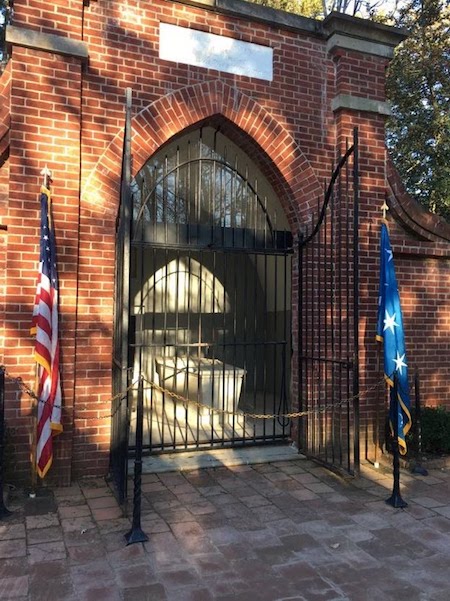
When considering places to go in Virginia to celebrate our nation’s 250th birthday, George Washington’s Mount Vernon might top the list. Our first president and a true statesman who put his country first, Mount Vernon shares his story, as a military leader, as president and as a husband and friend. At Mount Vernon, you’ll learn about camels (of course) and can visit both Washington’s burial site and the Slave Memorial.
Steven F. Udvar-Hazy Center (part of the Smithsonian National Air and Space Museum)
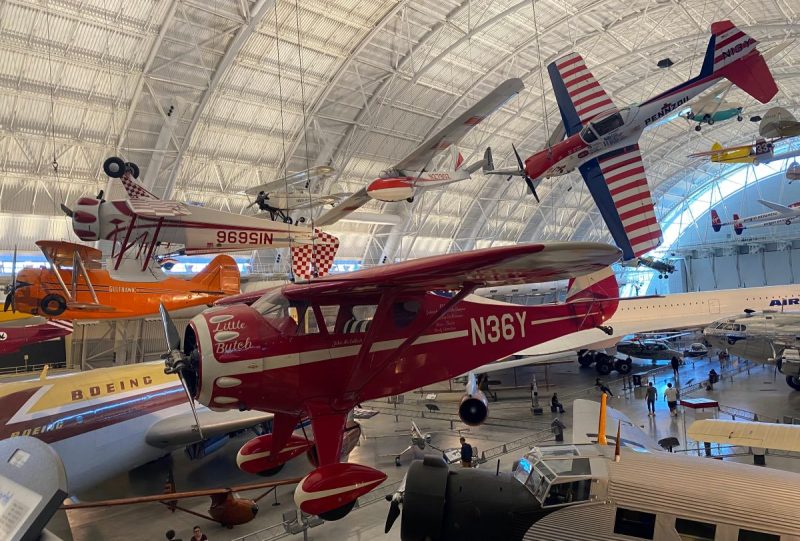
The Steven F. Udvar-Hazy Center located at 14390 Air and Space Museum Pkwy, near Dulles International Airport in Chantilly, VA, is home to historic air craft including private planes, military aircraft and rocket ships. The museum is open daily except Christmas. Admission is free, but parking is $15/vehicle.
George Mason’s Gunston Hall
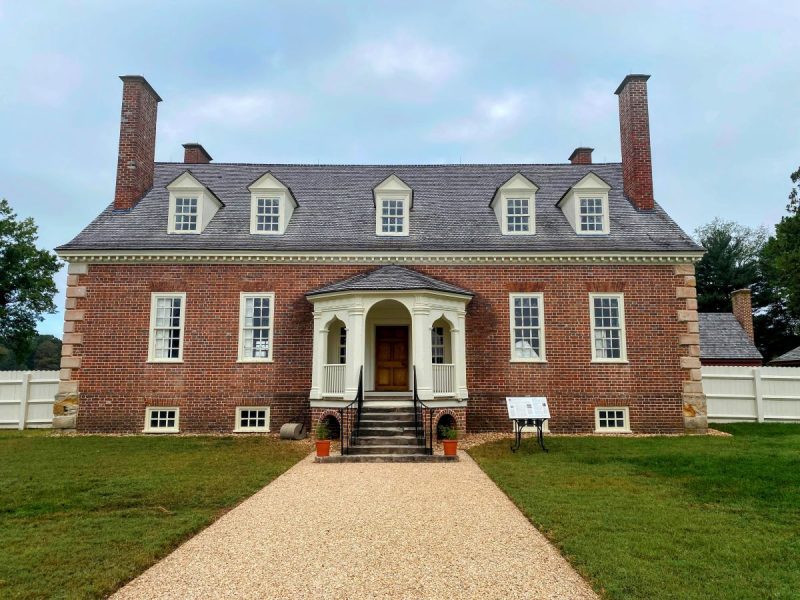
George Mason is often considered our “forgotten” founding father, but he played an important role in our nation’s first federal government. He was the author of the Virginia Constitution and the Virginia Declaration of Rights which formed the basis of our US Bill of Rights.
George Mason struggled with the moral issues of civil rights, equality and representation. When visiting George Mason’s Home, Gunston Hall, you’ll learn about our forgotten founding father and have the chance to grapple with the societal issues that still confound us at times today. Purchase tickets online — ticket prices and operating hours vary seasonally.
Spend a day in Old Town Alexandria
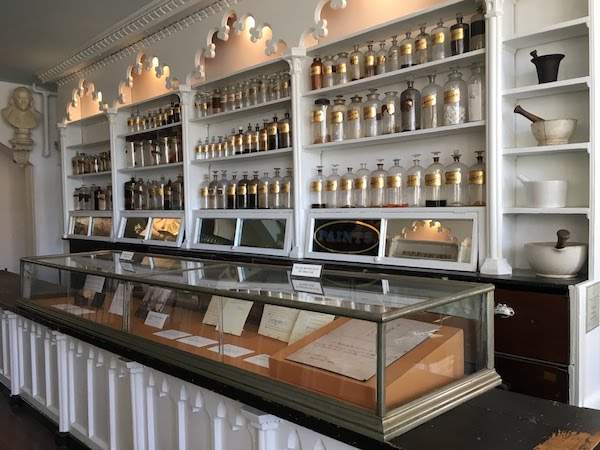
Alexandria, Virginia on the banks of the Potomac River was founded in 1749, a tobacco port founded by Scottish settlers. While the town has grown and modernized, it has done much to protect its architecture and history. Spend a day (or two) in Alexandria to soak in the history and ambiance that it has worked so hard to preserve. Don’t miss the Stabler-Leadbeater Apothecary Museum which provided medications for Martha Washington and Robert E. Lee, among others. The Spite House at 523 Queen Street is not open to the public, but is the narrowest house in America at just 7 feet wide with a super cool backstory. Lastly, enjoy shopping at the Torpedo Factory Art Center or at cute shops in the historic city center. Use our guide to the best things to do in Alexandria to plan your visit.
Visit Quantico: The National Museum of the Marine Corps
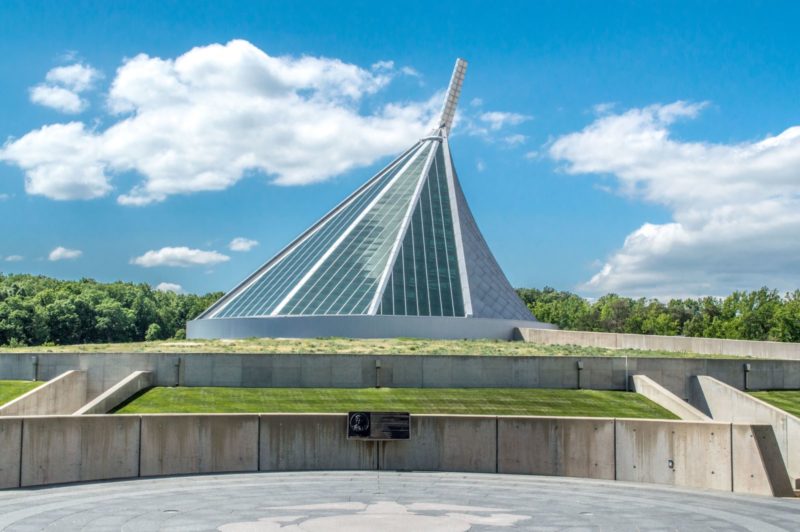
The National Museum of the Marine Corps is located at 18900 Jefferson Davis Hwy in Triangle, Virginia just off I-95 south of Alexandria. Your tour begins in the Leatherneck Gallery, which encapsulates the entire history of the USMC in one light-filled space. You’ll see aircraft, military vignettes, quotes of courage and determination and other thoughtful pieces throughout this gallery.
From there, you’ll travel to the Making Marines Exhibit which highlights the process new Marines must go through from recruit to graduate. The museum continues with a historical exhibit that highlights each major era in USMC history and so much more. It’s an amazing space, reverent and uplifting at the same time. Allow four hours to see the museum. Admission is free. The museum is open daily except for Thanksgiving and Christmas.
Arlington National Cemetery
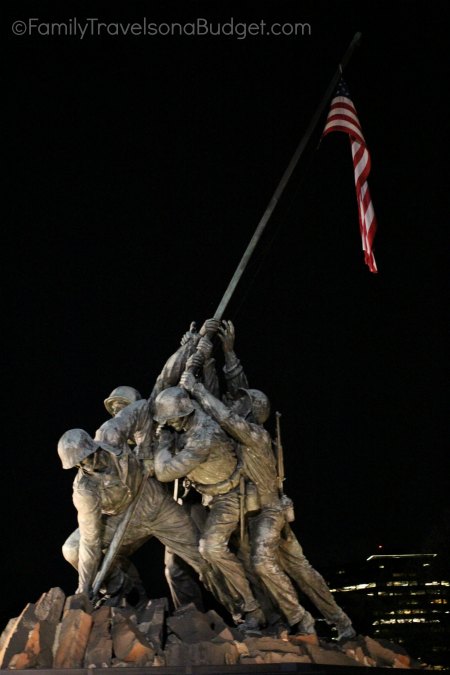
Arlington National Cemetery, located at 1 Memorial Ave, Fort Myer, VA, is a place where those who served our country with their lives are remembered. The cemetery is the final resting place of President John F. Kennedy. It’s also where you’ll see the Tomb of the Unknown Soldier, the statue commemorating Iwo Jima, and many other monuments and memorials. I highly recommend a guided tour of Arlington National Cemetery to learn the history of the cemetery and stories of heroes laid to rest here.
Places to go in Virginia on the Chesapeake Bay
The Jamestowne Settlement on the shores of the James River was the first permanent English settlement in the Americas, dating back to 1607. So, when looking at places to go in Virginia for America 250 celebrations, this is an obvious choice. But, this region also has a stong pirate history and played a major role in the Civil War. Today, Norfolk is an important US Naval Base.
Where to stay when visiting the Chesapeake Bay area
Williamsburg Woodlands Hotel & Suites: Located at 105 Visitor Center Drive in Williamsburg, this is the official hotel of Colonial Williamsburg. The hotel offers rooms that sleep five, a great splashpad and pool in the summertime, free continental breakfast and free parking. The hotel is in walking distance of everything at Colonial Williamsburg, making this an easy home base for your trip to Williamsburg, Yorktown and Jamestown.
The Landing at Hampton Marina, Tapestry Collection by Hilton: Located at the marina in Hampton, Virginia at 700 Settlers Landing Road, we recommend this hotel for its premier location in Hampton. Whether going for the Blackbeard Pirate Festival or to see the historic sites throughout town, this is a great home base. The hotel offers spacious rooms, incredible views of the marina and close proximity to Fort Monroe.
Hampton Inn & Suites Newport News: For people who like to stay in one place for a whole vacation, this is the ideal location, about halfway between Williamsburg and Hampton, near I-64. It’s a great home base with spacious suites, kitchens, an outdoor pool (seasonal), free breakfast and onsite parking ($5 daily fee). The USS Monitor Center is only a few minutes away.
Colonial Williamsburg
Colonial Williamsburg, near the Atlantic coast, has long been one of the most popular places to go in Virginia. And, for good reason. This representative recreation of a colonial town is incredibly well done, with period actors, colonial buildings that show what life was like for people of different economic position, and all the extras: restaurants, colonial kids’ games, horses and buggies and even gas lamps. Allow 2 or 3 days to fully experience all Colonial Williamsburg has to offer.
Yorktown Battlefield
Near Williamsburg, Yorktown Battlefield in Colonial National Historic Park is home to the last major battle of the Revolutionary War. In 1768, General George Washington with American and French allies, defeated Lord Cornwallis’ British Army. From that day forward, our independence was secure.
At the park, there’s plenty to do for a half day visit. Visit the battlefield visitor center to learn more about the Battle at Yorktown. Take self guided driving tours to learn more about the battle where it happened. Or, walk down “Main Street” in Historic Yorktown to see what life was like in colonial times.
Yorktown Battlefield is part of the National Park Service.
Jamestown Settlement
Explore historic Jamestown Settlement to learn about the earliest days of American history at our nation’s first permanent settlement. See reenactments of daily life in the 17th century. Learn what life was really like for the Continental Army. Discover hardships and heroics as you learn the stories of our earliest permanent settlers, a full century before we became a country.
Money Saving Tip! Save time and money with a combo ticket to everything in the Historic Triangle including five days unlimited admission to Jamestown Settlement, Historic Jamestowne, Colonial Williamsburg (does not include all extra activities), Yorktown Battlefield and the American Revolution Museum at Yorktown. (PURCHASE HERE)
USS Monitor Center at the Mariners Museum
The Mariners Museum at 100 Museum Drive in Newport News, shares some of the Civil War history of this important region. The James River and the Chesapeake Bay were critical waterways during the Civil War. The USS Monitor Center’s Ironclad Revolution shares the story of the USS Monitor, the CSS Virginia and the 1862 Battle of Hampton Roads. Artifacts, documents and other exhibits share the story of those people who lived through this challenging time in our history.
The museum is open daily from 9:00 a.m. to 5:00 p.m. except for Thanksgiving and Christmas. Admission is $1. (That is not a typo.)
Fort Monroe
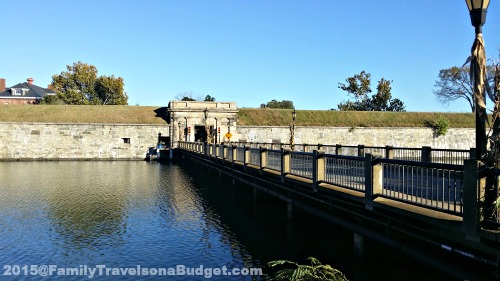
One of my favorite historic places to go in Virginia is Fort Monroe in nearby Hampton. I’ve been there three times and made a detour one trip to show Rob. Fort Monroe is the largest stone fort in the United States, an absolutely remarkable structure. Named for President James Monroe, it was completed in 1834 under the supervision of Robert E. Lee. Yes, that one.
During the Civil War, Virginia joined the confederate states, but Fort Monroe was Union controlled throughout the war. When Lee was ordered to take the fort, he flatly refused, saying he built it and he knew he’d never be able to take it.
And, during the Civil War, enslaved persons who escaped and made it to the entrance of the fort were brought inside and sheltered. Since the Confederacy considered slaves to be property, Major General Benjamin Butler declared them contraband of war and did not return them to the Confederate Army. Confederate President Jefferson Davis was imprisoned there for two years after the war ended.
The Fort served the military through 1946. Walk along the top of the fort to see a pet cemetery, views of the Chesapeake Bay and even Naval ships as they come and go from Norfolk. Fort Monroe is a National Historic Landmark managed by the National Park Service.
Places to go in Virginia Wine Country
This region seems large, but really, it’s horse country, wine country and amazing history wherever you go. I love traveling the back roads from Charlottesville on the west to Loudoun County on the east. If you want a long, leisurely roadtrip to see historic places, this might just be the trip for you! Because it’s a wider region of the state, I don’t have specific hotel recommendations to make home base. I will recommend places when I can. This section is divided by city rather than by attraction.
Charlottesville, Virginia
Charlottesville is one of my favorite cities in all of the country. We almost moved here. But, I have learned to settle for frequent visits as Charlottesville is great for families.
The Charlottesville area was home to many of our early presidents including Thomas Jefferson, James Madison and James Monroe. There’s even more here to discover!
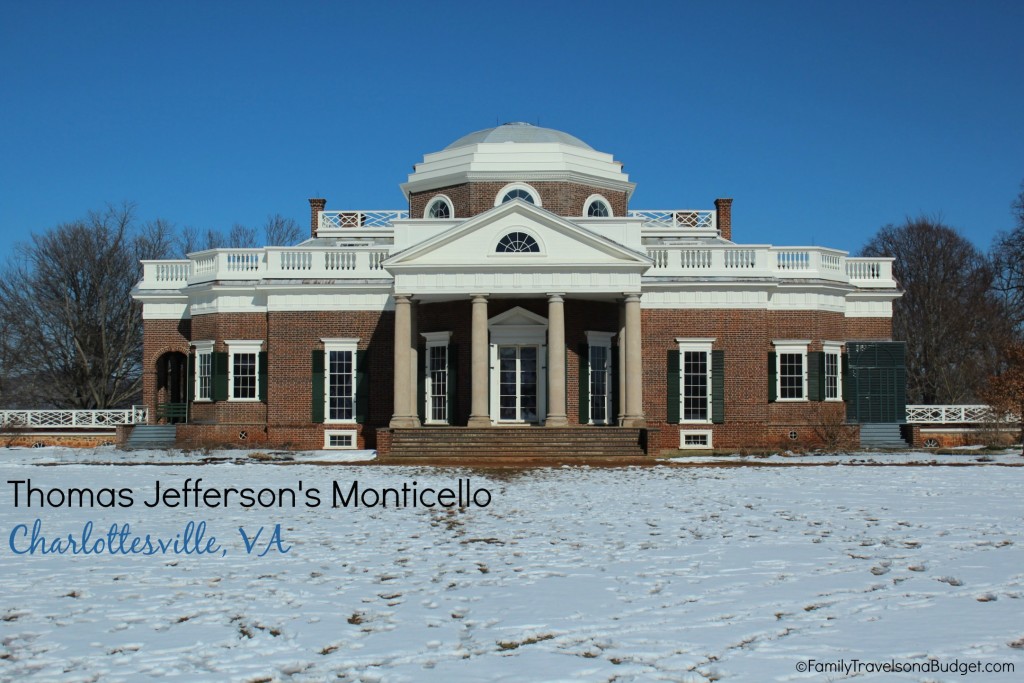
- Thomas Jefferson’s Monticello: When visiting Monticello, there’s so much to learn about Thomas Jefferson’s intellect, ingenuity and role as a founding father. You’ll also learn about the enslaved people who kept the place running. Monticello also has a museum that highlights many of Jefferson’s achievements, including an interactive children’s area where kids can explore science. In recent years, the Thomas Jefferson Foundation has worked with descendants of his enslaved workers to tell the story of slavery and their journey to freedom. During America 250, I recommend you purchase tickets in advance.
- James Madison’s Montpelier: James Madison, known as the father of the US Constitution, and his wife, Dolley, made their home at Montpelier in Charlottesville. Discover how vital Dolley’s role was to his success. And learn how they grappled with difficult issues of their time. Their home is filled with memorabilia which docents highlight as they share stories of their political and personal life. Allow three hours to visit. Click here for tickets and current hours.
- James Monroe’s Highland Estate: Not far from Monticello, James Monroe’s Highland estate is a smaller home, but it tells the story of a president who was instrumental in much of our country’s early development. Monroe played an instrumental role in the American Revolution, the Louisiana Purchase, the Missouri Compromise and much more. Like Madison, his wife was an important figure in his life. Many of the outbuildings still stand including slave quarters, barns and a guest house. Allow three hours to visit. Click here for tickets and current hours.
- Lewis and Clark Exploratory Center: The Lewis and Clark Exploratory Center at Darden Park is a great place for kids to learn about the Lewis and Clark Expedition and westward expansion. This is a hands on museum where kids learn by doing. Older kids can even learn about boat building as it was done in 1800. It’s a great way to make history relevant to help kids understand how difficult the Lewis and Clark expedition really was compared to flying or driving across country today.
- Jefferson School African American Heritage Center: The Jefferson School African American Heritage Center, located at 233 4th St NW in Charlottesville, honors the heritage and legacy of the African-American community in the Charlottesville area. The Center includes a permanent historical exhibit that shares the history and contributions of African Americans in the region. The center also features a rotating contemporary art gallery and hosts a number of events throughout the year. Open from 1:00 p.m. tp 6:00 p.m. Tuesday-Friday and 10:00 a.m. to 1:00 p.m. on Saturdays, admission is $10/adults, $8/ages 12-17 and 65+. Kids under age 12 and military are free.
Culpeper, Virginia
After a few days in Charlottesville, head up US 29 North to the historic town of Culpeper, Virginia. Talk about history, George Washington did the initial survey to lay out the town of Culpeper way back in 1749. He was all of 17 years old at the time!
It seems he knew what he was doing, because Culpeper is one of those thriving small towns that formed the backbone of our young nation. If anything, it’s more vibrant today.
I highly recommend staying in downtown Culpeper because the town is so walkable.
For historical sites, these are the must see spots:
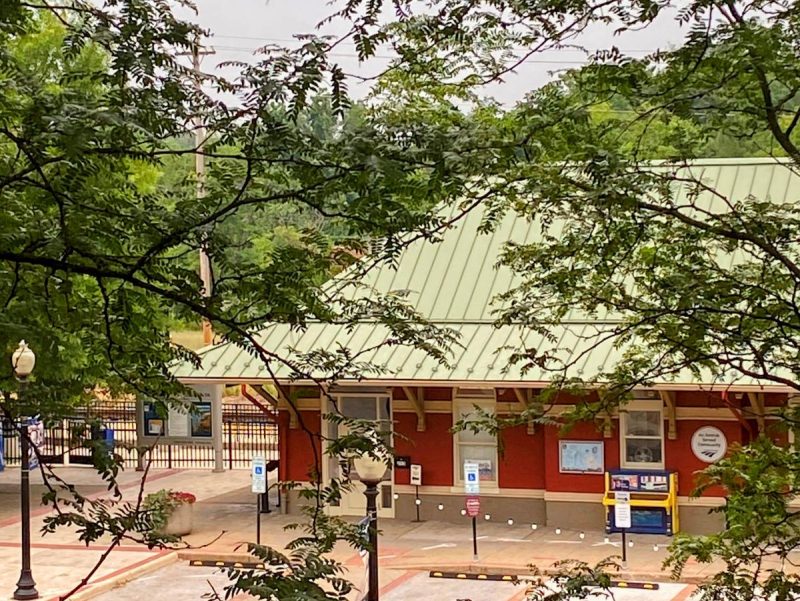
- The Museum of Culpeper History: Located at the historic train depot at 113 S. Commerce Street, museum exhibits showcase Native American History, Colonial History, Civil War History and more. This little town has seen a lot through the centuries. Hours generally are 10 am to 4 pm, but they can vary, so check the website to plan your visit.
- TheCulpeper Minutemen Monument at Yowell Meadow Park: Related directly to our nation’s 250th birthday, the Culpeper Minutemen Monument honors Virginia’s first, the men who organized on the spot where the monument sits and fought their first battle of the Revolutionary War at Great Bridge in 1775.
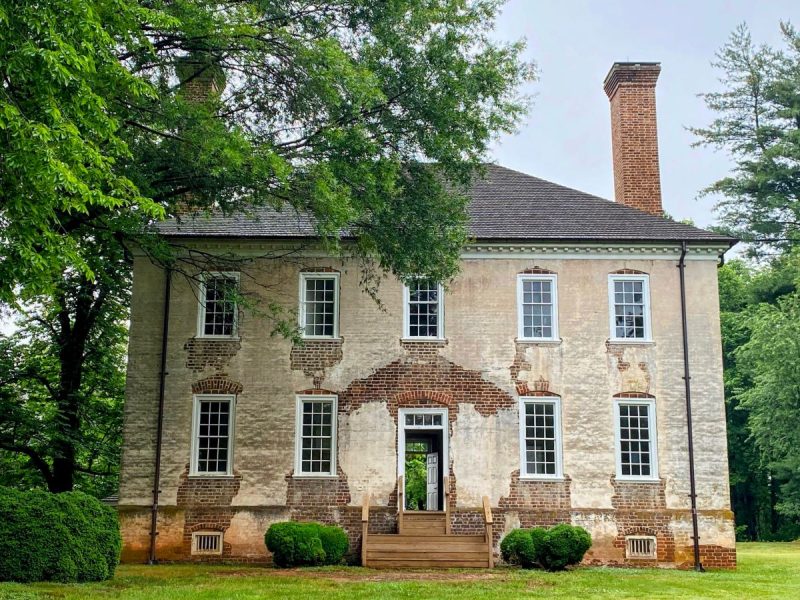
- Historic Salubria Manor: Located at 19173 Salubria Lane in nearby Stevensburg, this is the oldest Georgian style brick home in central Virginia. Built in the mid-1750s, it is incredibly well-preserved. When visiting, you’ll see the thumbprints of enslaved persons who made the bricks to construct the home and learn about the early German influence in the area.
- The Graffiti House in Brandy Station: The house, built in 1858, was used as a hospital for both Confederate and Union soldiers during the Civil War. As in many other battle locations, soldiers who ended up here wrote their names, date and sometimes their rank and unit on the walls of the home. It’s truly amazing that this record still exists more than 150 years later. Contact the Graffiti House directly to schedule a visit to this important cultural and historical stop on the Civil War Trails.
When you’re done exploring Culpeper and enjoying all the great restaurants, head north to Leesburg, Virginia in Loudoun County. It’s just a little over an hour north of Culpeper on US 15. This beautiful drive takes you through the rolling foothills of the Blue Ridge Mountains, past wineries and farms and through the town of Warrenton.
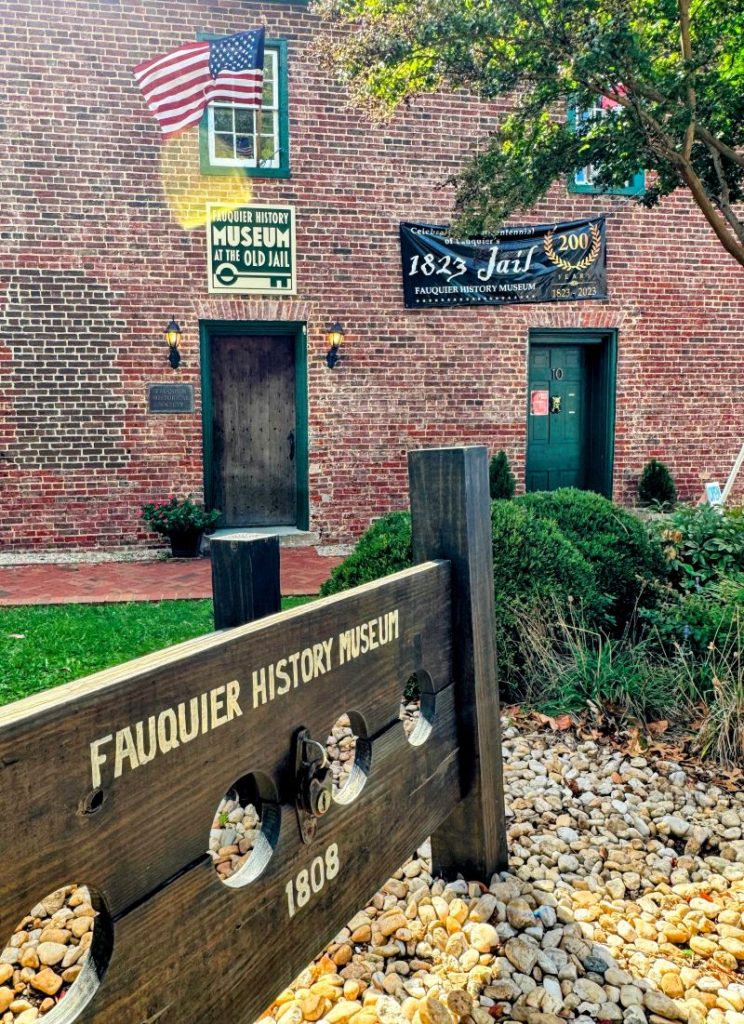
Stop in Warrenton, Virginia to learn about the suffragette movement at the Fauquier History Museum at the Old Jail downtown. And, just across the street, get a delicious treat for your drive from the nationally famous Red Truck Bakery!
Loudoun County, Virginia
It’s hard to believe that Loudoun County, Virginia is just a short drive from Washington, DC. Sprawling farms and wineries make it seem like you’re in the middle of nowhere. But, you’re not. Loudoun County is home to many interesting historic sites, a fitting end to your heart of Virginia history adventure.
Top sites in Loudoun County include:
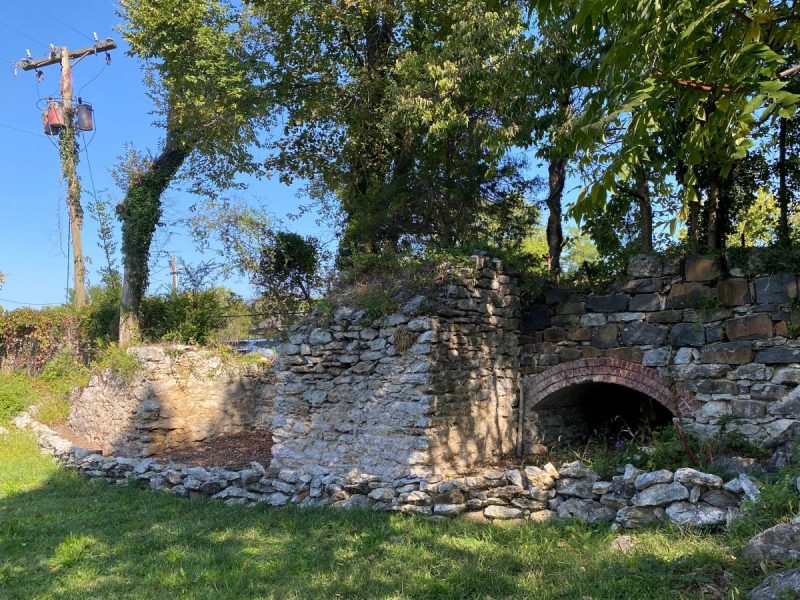
- The Washington & Old Dominion Railroad Regional Park: This hiking, biking and horseback riding trail runs along an old railroad line where history happened. Civil War skirmishes, industrial development of the region, Jim Crow laws… all are part of what makes this 45 mile long park trail so important. Historic markers, preserved industrial “ruins” and side trails to small parks all provide unique insight into the social and economic development of this corner of Virginia.
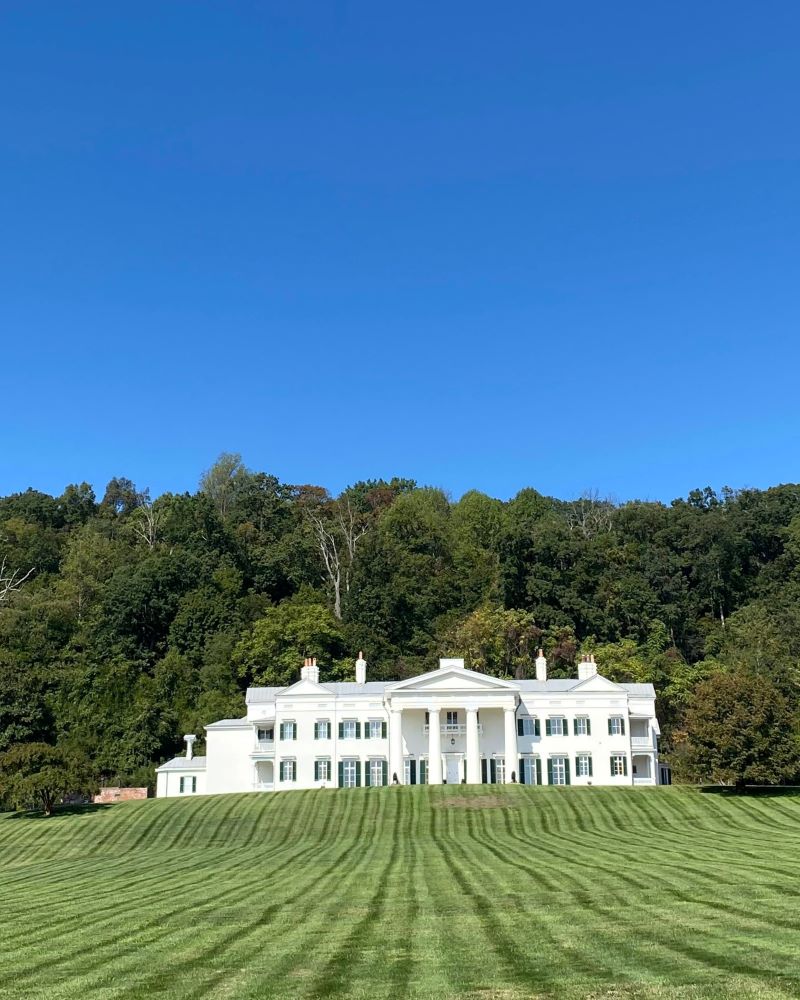
- Davis Mansion at Morven Park: Located at 17195 Southern Planter Lane, in Leesburg, this mansion was home to former governor Westmoreland Davis and his wife, Marguerite. They lived here full time until he became governor in 1917. The house and grounds are open to the public. The grounds are free to visit, and you might just get to see a horse race if you go the right day! Mansion tours are by reservation only. On the tour, you’ll learn about the architecture and artifacts in the home as well as the important role both Governor Davis and his wife played in Virginia during the 1918 flu pandemic and World War I.
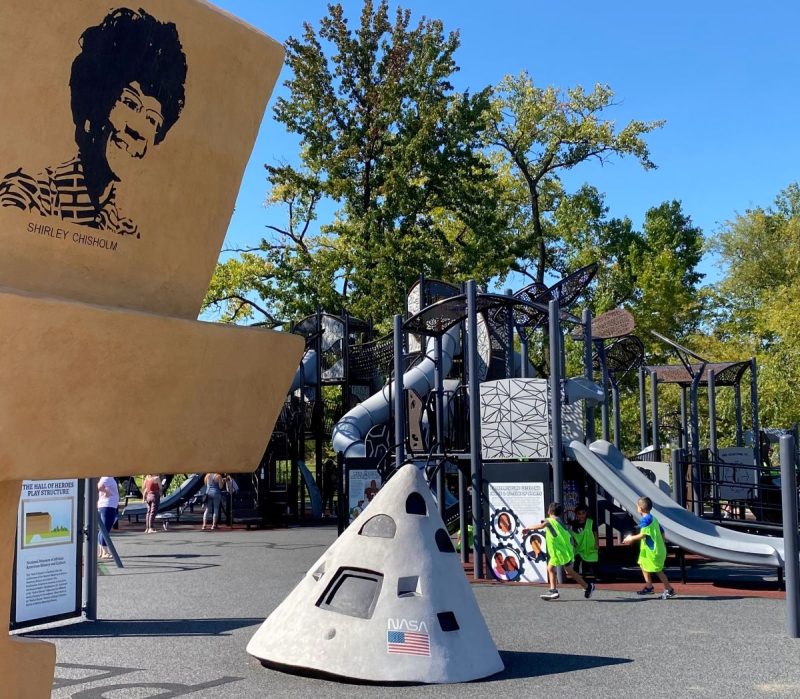
- Visit Douglass High School Park and Playground: Douglass High School opened in the 1940s, the only black high school in Loudoun County and closed with desegregation. Today, the campus serves as an education and community center where people can learn about the Civil Rights movement. The playground is especially interesting with every piece of equipment highlighting a specific moment in the Civil Rights Movement and/or celebrating the contributions of African Americans to science, the arts and politics in our country.
While visiting Loudoun County, spend some time shopping and eating your way through historic Downtown Leesburg. The Tuscarora Mill restaurant, set in a former mill with many industrial elements still visible, is a neat way to step back in time and enjoy a delicious meal.
Places to see in the Mountains (I-81 Corridor)
For one of the most history packed drives you’re likely to find, head to the beautiful mountains of western Virginia. These small towns, many of them surveyed by George Washington, have seen their share of historic moments from colonial times to the Civil War and even more. Let’s start, shall we?
Wytheville, Virginia: There’s only One!
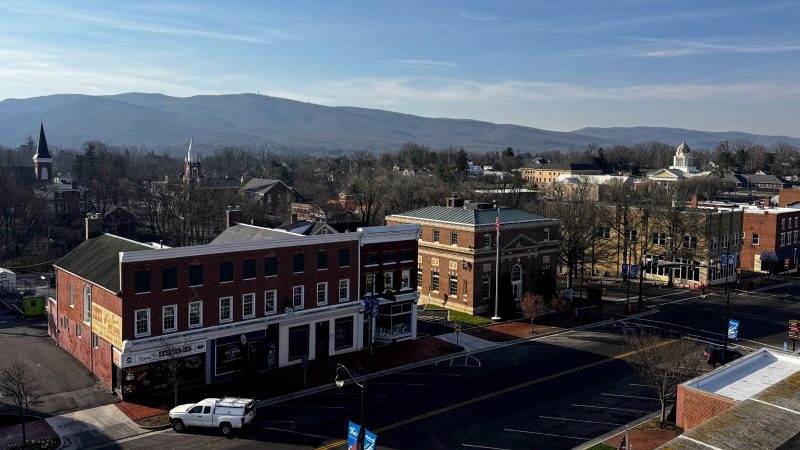
Wytheville, Virginia, located at the crossroads of I-77 and I-81, quickly became a family favorite when we visited earlier this year. This small town is packed with historic charm. And, it just won the Great American Main Street Award for excellence in preservation based commercial development. Take a walk down Main Street and you’ll quickly understand why. The people here have truly committed to preserving the past with every modern improvement. It’s small town America at its very best.
Top historic sites in Wytheville include:
- Edith Bolling Wilson Birthplace Museum: In the heart of downtown at 145 East Main Street, the Edith Bolling Wilson Museum celebrates the life of President Woodrow Wilson’s wife, her role in running the White House during World War I and many other memorable moments from her life.
- The Thomas J. Boyd Museum: Just a couple blocks away at 295 Tazewell Street, the Boyd Museum shares the history of Wytheville, from its early days as a mining “company town” to the 1950 Polio Epidemic and its tremendous impact on this small town and more.
- Enjoy a meal at the 1776 Log House Restaurant: Located at 520 East Main Street, this restaurant in an authentic log house dates back to 1776. Resrvations are highly recommended, though there is bar seating at Christopher’s Bar at the back of the restaurant. The food is amazing! And the service at this family owned restaurant is stellar.
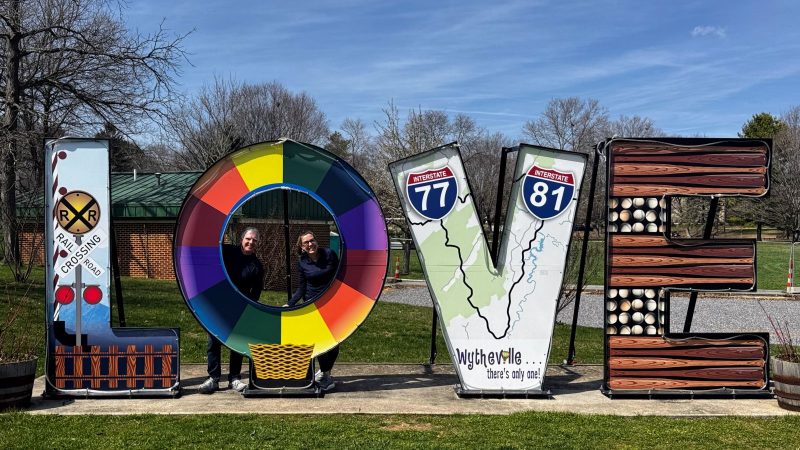
There’s so much to see and do in Wytheville, you can easily enjoy three days here. I took my husband recently, and we are already planning a return visit! If you have the time, here’s a great Wytheville itinerary for the whole family.
Appreciate the Industrial Revolution in Roanoke
One hour northeast on I-81, Roanoke is a bustling city built on industry. You could easily spend days exploring historic Roanoke. And, if time is limited, I recommend you stay downtown at the beautifully restored Hotel Roanoke for easy access to museums and restaurants.

Top historic attractions in Roanoke:
Downtown Roanoke, like many other towns, suffered from urban blight in the 1970s and 1980s. Community leaders and local businesses committed to revitalization. Today, museums, attractions and restaurants came back, making the city a destination to remember.
- Center in the Square: Located at One Market Square downtown, this complex is home to several museums and other attractions, a true anchor for the city. There’s an aquarium, the Harrison Museum of African American Culture, the Children’s Museum, the History Museum and the Science Museum. There’s also a pinball museum featuring a century of pinball machines, a fun way to appreciate advances in technology.
- Virginia Museum of Transportation: Located in Roanoke’s century-old freight station, 303 Norfolk Avenue SW, the Virginia Museum of Transportation preserves and shares the history of rail, car and air travel in Virginia. Spend a few hours here learning about the role of rail transportation in our nation’s development. Wonder at the evolution of car travel — and how much more cars can do now.

Beyond the city, Roanoke is home to the Roanoke Star, which sits high up on Mill Mountain. The Roanoke Star is the largest manmade star in the world, and is a welcoming beacon to all who visit.
Learn military history in Lexington
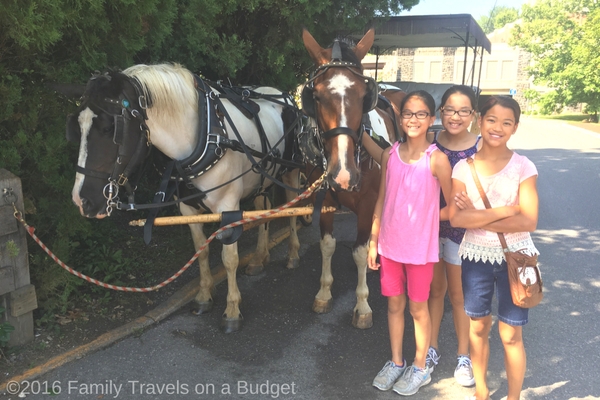
Less than an hour from Roanoke, Lexington, Virginia’s historic downtown is home to many important military and war sites. There are many ways to learn Lexington’s history, but we think a horse drawn carriage ride is the most fun!
There are so many things to do in Lexington, though, so check this out.
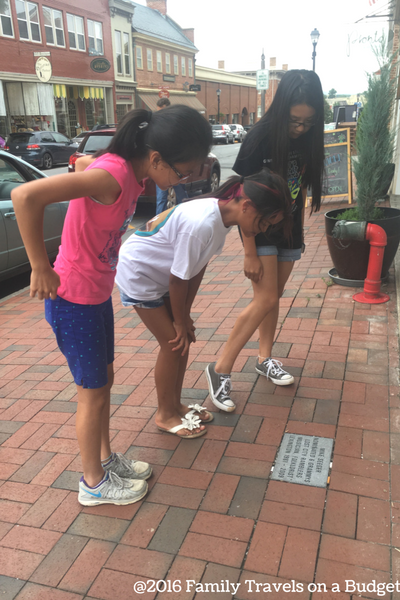
- The Righteous and Rascals of Rockbridge: For a leisurely tour of Lexington, take the Righteous and Rascals self-guided walking tour. Throughout downtown Lexington, you’ll learn history as you read historic paver stones. The link included here provides even more information as you learn the stories of the heroes and villians who impacted events here.
- Visit the local history museums. Lexington is home to Washington and Lee University and the Virginia Military Academy. Both institutions have interesting history museums, and at Washington and Lee, you’ll learn about the relationship between George Washington and Robert E. Lee as well as Lee’s influence on the university’s development. The VMI Museum is open daily from 9:00 a.m. to 5:00 p.m. VMI is our nation’s first state-sponsored military college, and exhibits highlight military leaders like Stonewall Jackson and Gen. George C. Marshall, who is known as the “Architect of Victory” for WWII. You’ll also learn about cadet life on campus. The Stonewall Jackson House, also on the VMI campus is another great museum to learn about the life of Thomas “Stonewall” Jackson during the mid-1800s: Professor, church leader, businessman, family man and community leader in the decade leading up to the Civil War.
Like other cities and towns along I-81, Lexington is walkable and easy to explore. For hotels, I recommend The Gin Hotel, an Ascend Collection Hotel for its ideal location near everything, great service, free parking, wifi and continental breakfast. And, pro tip: The Sweet Things Ice Cream Shoppe is just a block away for tasty evening treats after a day of exploring.
History in Shenandoah County
Shenandoah County, Virginia is home to small towns and incredible stories. Just an hour or so north of Lexington, Shenandoah County has a long history of farming and mills, feeding our country for centuries.
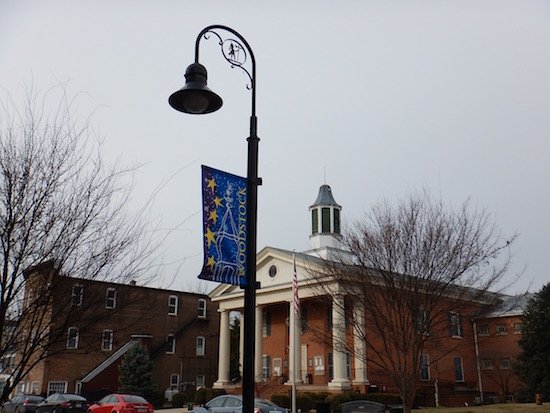
Stop in here to learn a bit about our past. My three favorite stops in Shenandoah County are somewhat historic and also entertaining.
- Stop in at Route 11 Potato Chips: Located at 11 Edwards Way in Mt. Jackson (Exit 269 on I-81), Route 11 Potato Chips is a small batch potato chip company where you can watch them make the potato chips. I’m including this here on a history tour, because if traveling with kids, they can actually SEE industry, which made our country great, in action. They’re open Monday-Saturday from 9:00 a.m. to 5:00 p.m. AND they always have samples available. They only ask that you don’t take photos of their production area. My favorite is the traditional lightly salted. My daughter loves the dill pickle and my husband’s favorite is salt and pepper. You can’t go wrong, though. Nothing beats a fresh chip!
- Tour Shenandoah Caverns and American Celebration on Parade: Just 3 minutes from Route 11, Shenandoah Caverns has been an American attraction since it opened in 1922 thanks to railroad travel that brought people to the area. It still inspires and entertains today. The American Celebration on Parade Museum is home to many parade floats, including several presidential inuagural parade floats dating back to Truman in 1949. It’s an interesting collection of historic memorabilia you can’t see anywhere else.
- Shenandoah Valley Cultural Heritage Center at the Edinburg Mill: Located at 214 S. Main Street in Edinburg (Exit 279 on I-81), learn about life in small mill towns, the Civilian Conservation Camps, and early transportation in the Shenandoah Valley. Historically significant, you’ll learn about “The Burning,” when General Sheridan tried to burn the Shenandoah Valley during the Civil War. The town of Edinburg escaped the destruction, and the story of how they did is quite fascinating.
Whether you stop in Shenandoah County for a quick visit on your history tour along I-81 or you choose a weekend getaway to the Shenandoah Valley, there’s lots to do! We love to visit Shenandoah in Winter!
Finish strong in Winchester, Virginia
Less than an hour from Shenandoah County, Winchester, Virginia history dates back to colonial times, though their Civil War story is quite remarkable. There’s some great 20th century history here, too. Check out our guide of things to do in Winchester to expand your getaway beyond what we share in this article.
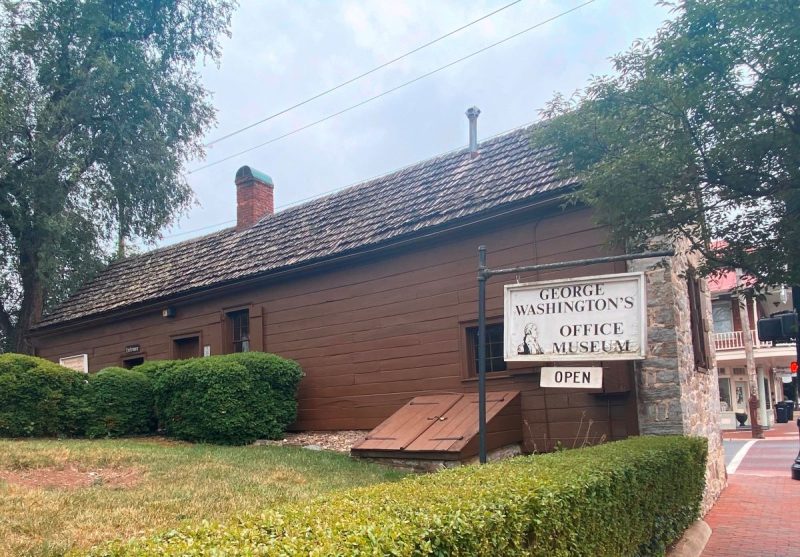
- George Washington’s Office Museum: Located at the corner of Cork and Braddock Streets in Downtown Winchester, George Washington used this space to supervise the construction of Fort Loudoun nearby. Many of his personal artifacts are on display. And, a statue of young George Washington stands just outside — a little different look from what kids learn in school. This is the original building where he worked and is not ADA accessible.
- Stonewall Jackson Headquarters Museum: During the Civil War, Winchester changed hands approximately 72 times, more than any other place in the country. Caught in a tug of war between north and south, it’s no surprise that Stonewall Jackson had headquarters here. This museum contains the largest collection of Jackson memorabilia. The house, located at 415 North Braddock Street, is another National Historic Landmark in Old Town Winchester, Virginia.
- Museum of the Shenandoah Valley: This sprawling museum complex includes the museum and the Glen Burnie House, plus close to 200 acres of park trails and gardens. The museum focuses on art and artifacts and exhibits of regional, historical significance. The Glen Burnie House, once owned by the founding family of Winchester, hosts special exhibits as well as historic furniture and art. I spent almost an entire day here, soaking in history displayed in a relatable way. It’s a highlight of any visit to the area.
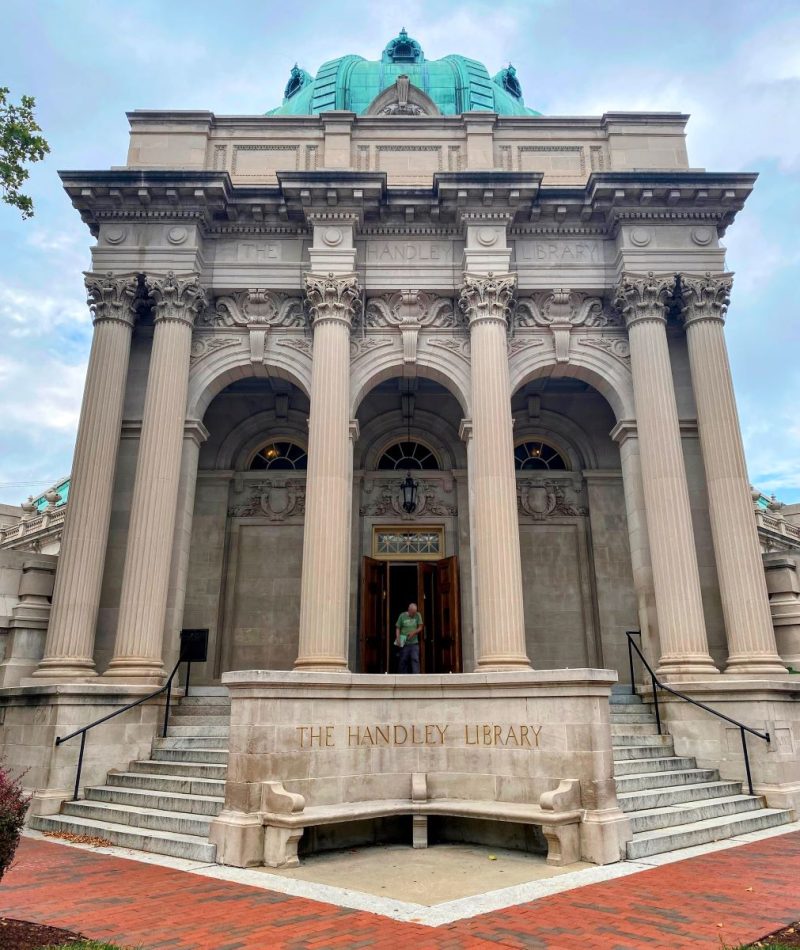
- Handley Regional Library: So, I discovered this accidentally (I ducked in to escape a summer downpour), and now it’s one of my favorite historical buildings in Winchester. Located at 100 Piccadilly Street, near the Loudoun Street Pedestrian Mall, is an architectural masterpiece. Built with money bequeathed by Judge John Handley of Scranton, PA to the city to build a library, Handley Regional Library is listed on the National Register of Historic Places. Thomas Edison considered it the most beautiful library he ever visited.
So, there you have it. As our nation celebrates its 250th birthday, I hope you’ll consider a trip to Virginia to learn more about the people and places that shaped who we have become. From farming to industry, colonial times to the Civil War to today, the story becomes more real when you see the places and things that defined each era. Virginia 250 truly tells the story of American history.
If you need more ideas or want to focus solely on the American Revolution in Virginia, check out the Virginia 250 website for events, activities, virtual activities and more.